98%
Clinical note accuracyThe full story
Clinical documentation is one of the most persistent sources of physician burnout, and much of it spills into after-hours charting. CureMD's AI Medical Scribe was built to cut that work, not by making documentation faster to type, but by removing the typing entirely.
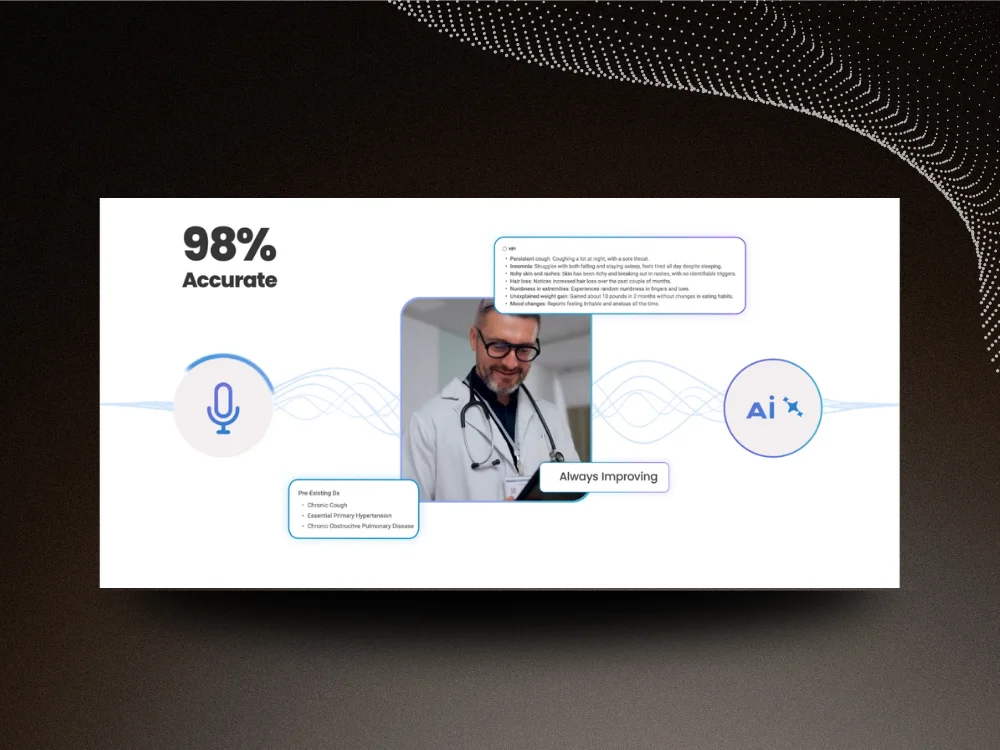
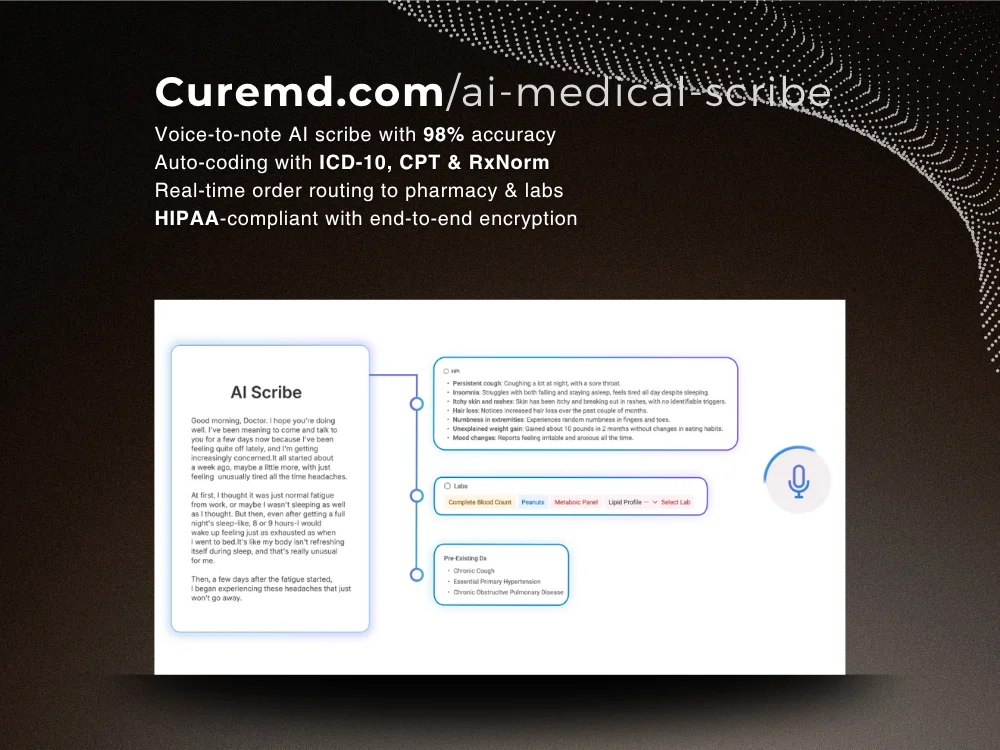
We built an ambient listening engine that activates at the start of a visit and operates passively in the background, capturing the full conversation between provider and patient. At visit end, the system generates a complete, structured SOAP note in under 15 seconds, per CureMD's published figures. The note arrives pre-populated with ICD-10 diagnosis codes, CPT procedure codes, and RxNorm drug references, ready for physician review and signature.
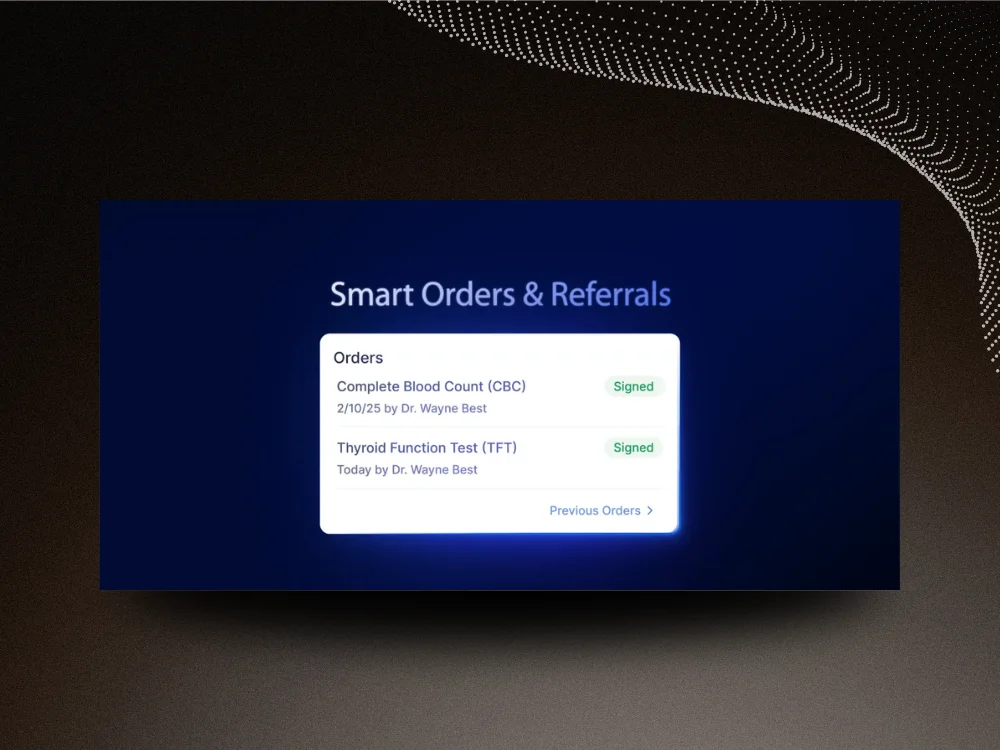
The automated ordering pipeline was one of the technically complex components of the build. As the physician speaks about labs, imaging, or prescriptions, the scribe identifies each order in real time, queues it, and routes it automatically to the patient's preferred pharmacy, laboratory, or imaging centre the moment the note is signed. This removed an entire category of manual interaction that had previously required separate system actions.
The underlying CureMD model has processed over a billion patient visits and adapts to each provider's documentation style and specialty preferences over time. It supports more than 30 medical and surgical specialties, handles multi-party conversations including family members and care team contributors, and is HIPAA-compliant with encryption, data minimisation, and comprehensive audit logging. Access is available on desktop, tablet, and via the Avalon mobile EHR app on iOS and Android.